
Uniformity - The Connection between fashion and sport
By Hannah Schmidt-Rees
Uniforms serve both a practical and aesthetic purpose. Logos and team colours serve as easy identifiable motifs. However, inclusions of helmets, guards and padding have continued to protect players health and reduce the risk of serious injury. It’s a combination of safety, performance and aesthetic.
Now, I know what you’re thinking, fashion and sports don’t go together. but, technically they do, in their own way. And I’ll be real with you all, I’m not much of a sports person. I can appreciate it, just from a distance. And my distance is writing an entire article about the connections between fashion and sports uniforms, not actually playing sports. For this article, I’ll be going through the history of different sport’s uniforms, and for clarity, I’ll be referencing US sports. Because, you know, the US like sports, a lot.
Uniforms not only serve the practical purposes, increasing a players performance and visually identifying players of the same team, they also serve as a visual representation of team spirit, unity, identity, shared purpose and equality (although more on equality later). Its camaraderie within fabric, cohesion within colour, allegiance in graphics. Studies have proven that wearing a uniform increases player performance and discipline. The feeling of being part of a shared unit, a team, a family in a sense, is something that a uniform that heavily influences, a visual connection. In addition, the history of sporting teams, legacies of wins or iconic moments, all tied to logos or player numbers, create a sense of pride, all derived from sewn in patches and printed motifs. And this stretches to fan merchandise, sharing that camaraderie, showing their pride and being and being an easily identifiable piece of clothing to feel connected to other fans in a stadium or on the street. Feeling part of something bigger than yourself.
In addition, national sporting colours for different countries (green and gold for Australia, black for New Zealand and orange for the Netherlands), play an important role in cultural pride, especially when considering international sporting games and the Olympics for example. It’s a physical fabrication of pride for a player’s society, religion or culture.
Throughout history, sporting uniforms have influenced the mainstream streetwear culture. Iconic teams, sports and games have transported uniforms from simply fans wearing merchandise to those (whether interested in the sport in question or not) wearing sporting memorabilia and uniforms to accentuate their personal style. The bright, graphic and easily recognisable aesthetic of uniforms is an easy way to add visual interest. This isn’t dissimilar to fashion brands as they are. Many people wear certain brands to show their allegiances to designers or movements that a brand represents (sustainability, legacy, plus size inclusion etc). So whilst we can simply look at sports uniforms as a branded, sometimes gaudy ways to identify teams and players, there’s a far bigger and deeper connection with fashion and how it feels to wear clothing.
Here’s some quick fire history of uniforms throughout three different US sports. I’ve chosen these three because they’re the ones I’m interested in the most and can stand researching. Sounds harsh but its true.
Baseball
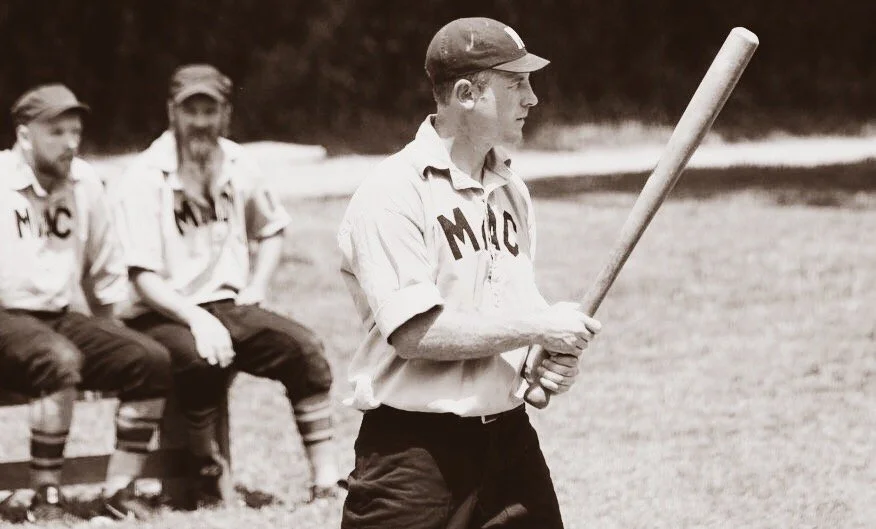
1849 - The New York Knickerbockers (great name) are the first baseball club to adopt an official uniform - blue pants, white flannel jerseys and white straw hats.
1907 - The Reading Red Roses of the Atlantic League became the first professional club to wear uniform numbers.
1912 - The New York Highlanders (later becoming the New York Yankees) were the first to wear pinstripes, becoming permanent in 1915.
1960 - The Chicago White Sox are the first team to put player names on the back of their jerseys - every team will follow suit, except for the NY Yankees.
In the 1800s, wool, whilst not the easiest choice for sports, was used to differentiate teams for the working class, as cotton was widely used. early baseball clubs wanted to align themselves with respect and the higher class.
Early teams modelled themselves after longstanding fraternal clubs, such as fire departments and volunteer military companies.
Football (NFL)
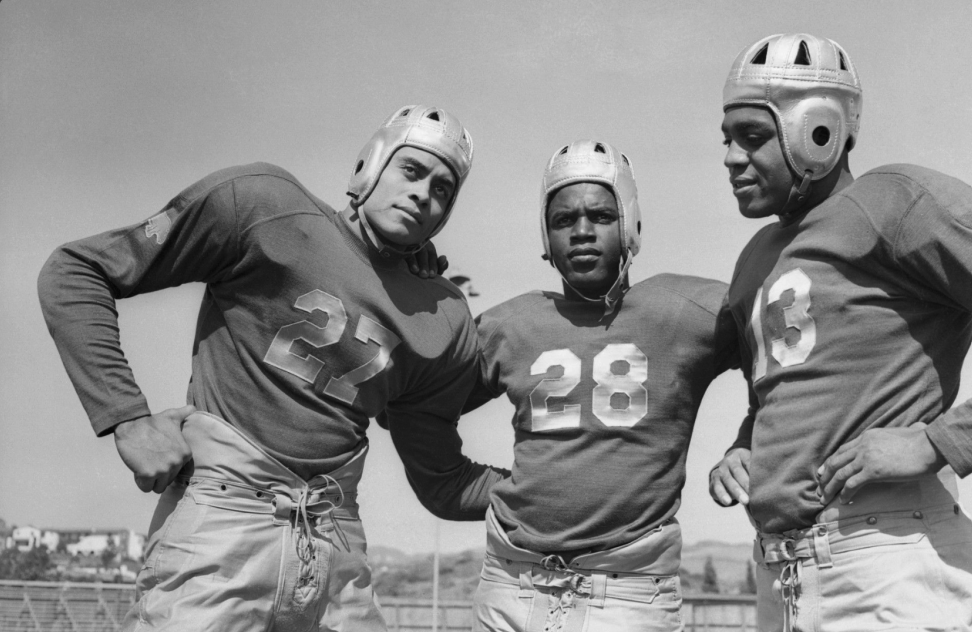
1948 - A Los Angeles Rams running back (can’t tell you what that position does but anyways) painted ram horns on his helmet, becoming the first professional football player to sport a custom helmet design. Fans responded to this positively to this as it made it much easier to tell which team the player was on, especially on the black and white televisions at the time.
1960s - As colour television became widespread, higher emphasis was put on full colour uniforms and brighter colours.
1973 - NFL uniforms rules was established in 1973 and led to the creation of the numbering system for each player’s position, becoming a staple.
1990s - originally NFL uniforms were made out of polyester jerseys, however, this lead to players slowing down due to the opposing team hanging onto their uniforms. This lead to the development of spandex uniforms, preventing the uniforms from hindering a players ability.
Basketball
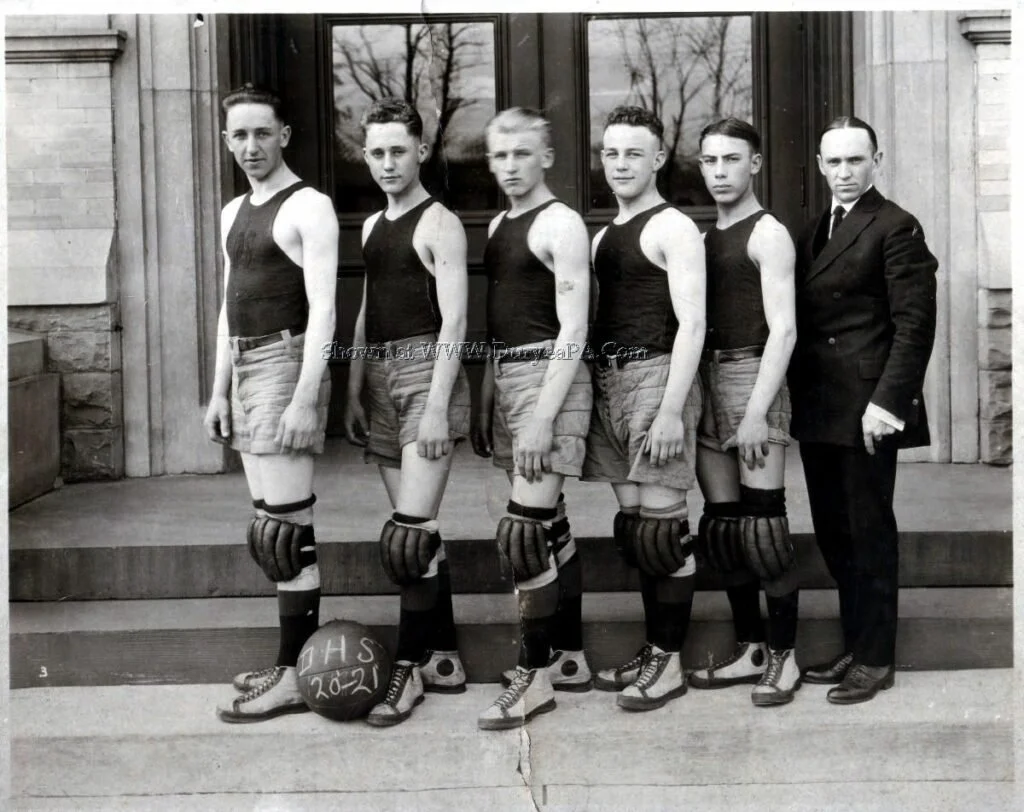
1900 - although early basketball players wore their own gym clothes, a need for a uniform was clear to avoid a player from intentionally passing to a player from the opposite team.
1920s - the trousers and woollen shirts moved towards the knee-length shorts and cotton jerseys.
1922 - Converse originally released their high-top shoes in 1917, but redesigned it in 1922 and named them after Charles ‘Chuck’ Taylor with the now-signature inner-ankle patch. Charles Taylor joined Converse in 1921 as a salesman, adding his signature to the ankle patch as an endorsement, which also served a purpose to protect the ankle.
1980 - synthetic blends became more popular for its breathability, as well as brighter colours, shorter shorts and more complex and tighter-fitting designs.
1987 - Micheal Jordan asked the president of Champion (the NBA uniform manufacturer at the time) to make his shorts longer so he could have something to hold onto when he was out of breath. From the 1990s, uniforms became baggier, which was also reflected in the hip-hop and streetwear scene at the time.
2017 - NIke, the official NBA uniform manufacturer, revolutionised the basketball outfit, incorporating the use of technology in fashion. Digital body scans were taken of players to see which areas of their body sweat the most, or which areas of their uniform was put under the most physical stress. From this data, uniforms were designed with precise air vents and arm holes, as well as using a new lightweight fabric. In addition, Nike also produced a ‘connected jersey’ for fans, with a chip sewn inside the bottom left hem, allowing fans to scan them and access scores, latest news, exclusive content and statistics.
Now, remember when I said, ‘more on that later’ when I talked about equality? Well, here’s the more. There often are discourses, especially online, that showcase the differences between men’s and women’s uniforms. Men’s uniforms are often baggy and fuller covering, whereas women’s uniforms are skin-tight and short. Arguments are made that women’s uniforms are designed for the male gaze, to reduce women’s sports to a ‘spectacle’ of the female form. It’s a difficult conversation to have, arguments can be made one way of the other. Women’s uniforms are created and regulated by official sports bodies, which means that the ‘revealing’ uniforms are officially controlled by the sports bodies and are intended to look a certain way. However, many female players say that the more skin tight uniforms are preferred by them as they don’t create a hinderance for their performance. Especially in recent decades, many official sporting bodies have created multiple options for female players to wear. For example, netball players have at least five different options to choose from. These are all dependent on cultural, religious and personal preference.
It’s a difficult issue to determine the answer for. For and against arguments can be made, but things have developed with time and hopefully will continue to develop to integrate both uniformity and personal preference.